UHC HEALTH POLICY AND HEALTH FINANCING REFORMS POLICY ANALYSIS DISSEMINATION SEMINAR

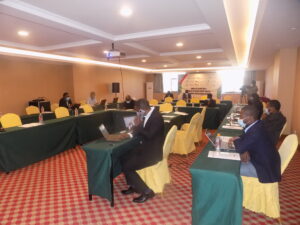
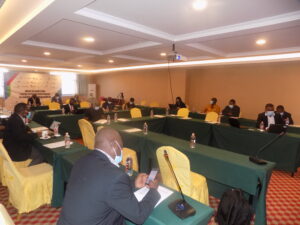
Delegates at the Seminar

Dr. Azariah Mosiwa, Director of Programs & Strategy, FACT


On 7th April 2021, FACT, with support from OSISA, organized a health financing reforms policy analysis dissemination seminar at Golden Peacock Hotel in Lilongwe. The event was graced by various stakeholders from the donor community, Civil Society Organizations (CSOs), and members of parliament such as the UHC champion Hon. Enock Phale. The seminar was organized to disseminate findings from a health policy analysis conducted by Impala Insights, a consultant contracted by FACT. Impala Insights was represented by Arthur Chibwana who was making the presentation. Gaps in the country’s health policy and recommendations on addressing the problems in order to attain UHC were presented to all stakeholders.


By: Wanangwa Sichinga

Public Relations & Communications Officer

READ MORE

WORLD TB DAY (WTBD) EVENT

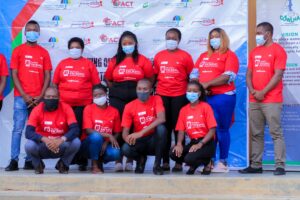
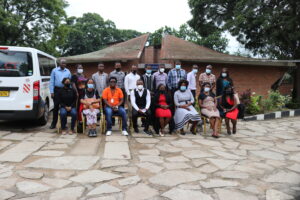
FACT Staff Group Photo

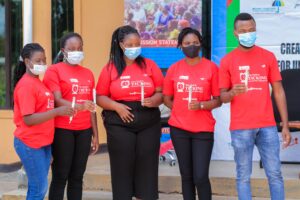
FACT Staff observing a Moment of Silence during the Candle Light Event

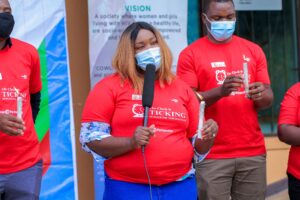
The Executive Director presenting a keynote address during the candlelight event

The Executive Director and an Official from JournAIDS lighting a candle for the candlelight ceremony

On the 24th of March 2021, FACT honored the WTBD commemoration to raise public awareness about the devastating health, social and economic consequences of TB, and to step up efforts to end the global TB pandemic. Due to the COVID-19 pandemic, there were no public events organized. FACT, therefore, held a ceremony at the office premises with delegates from partner organizations such as JournAIDS and COWLHA. The ceremony involved speeches from officials of all organizations and a candlelit service that observed a moment of silence in honor of the lives lost due to TB and the COVID-19 pandemic.


By: Wanangwa Sichinga

Public Relations & Communications Officer


READ MORE

ORIENTATION MEETING WITH MEDIA HOUSES ON TPT AND 3RH IN MANAGEMENT OF CHILD TB

Group photo between FACT, NTP, KNCV, EGPAF and media house representatives


TB continues to be a major challenge in child health in Malawi. Over half (55%) of the estimated 1 million children with TB of age 0-14 years were reported in 2017.  In 2016, Malawi registered 16,959 TB cases and childhood TB made up 8.6% of these cases.

Childhood TB policy is available and the world health organization oversees the implementation of the policy, however affected communities and CSOs were not fully engaged in the policy development process, which has created a gap in the implementation. The policy stipulates the need to diagnose TB in children earlier enough for early treatment initiation using child friendly formulations. The NTP rolled out GeneXpert machines, recommended by WHO as the initial test for pediatric TB diagnosis, which will significantly improve diagnosis of TB in children compared to the old and less sensitive method based on microscopy, however this is failing to reach optimum utilization and scale up due to domestic financing challenges and weak policy implementation mechanisms, compounded by the lack of demand for accountability by the affected communities.

In addition, the Ministry of Health plans to progress the current first-line formulation of pediatric TB drugs to a new, child-friendly formulation. However, additional support is needed to rollout these innovations, including ensuring new pediatric formulations both for active and latent TB infection are ordered, available in clinics and used.

In line with that, FACT is implementing a project with support from EGPAF that aims at strengthening Civil Society Organizations and Parliamentarians in response to effective TB management. As part of the project, FACT organized a training with Media houses with the aim of orienting them on the importance of 3RH and IPT in the fight against pediatric TB on 11th March, 2021 at Grace Bandawe Conference Centre, Blantyre.  This orientation aimed at guiding media houses to better understand the gaps that exist in the country as far as 3RH, and IPT are concerned, especially for children.

FACT then liaised with the media houses on tailored programs that will create awareness on 3RH and IPT, as well as create demand to scale up access to 3RH and IPT. This follows the common knowledge that if the communities affected by TB had adequate information, they would be able to lobby for strong TB policies, adequate resources and the development of effective community-oriented programs, sufficient to address the needs of people affected by TB, particularly children.  It was noted during the training that all media houses have health programs that are broadcasted which was a starting point for the roadmap development.

PROJECT GOAL

FACT proposed to carry out a demand creation and advocacy project to address the gaps that have been highlighted above with the goal to:

  • Strengthen development and implementation of effective TB policies on management of Childhood TB, TPT implementation and scale up through implementation of tailored demand creation strategies among parliamentary committees, TB CSOs and affected groups by end of the project.

The objective of the activity was to;

  • Increase Public Sensitization on Covid19 and TB policies, especially 3HR and TPT scale up towards generating demand for services through effective Media engagement.

Media houses which were invited for the training were; Zodiak Broadcasting Station, Times Group, MBC, Nations Publications, Mibawa TV, Blantyre Synod Radio, Transworld Radio, Kuwala Radio, Neno FM, Mzati Fm, Yoneco FM, Chanco Radio, Joy Radio and Capital FM.


By: Wanangwa Sichinga

Public Relations & Communications Officer


READ MORE

VACANCY ANNOUNCEMENT

VACANCY ANNOUNCEMENT

BACKGROUND

Facilitators of Community Transformation (FACT), is a Non-governmental Organization that strives to promote community engagement for sustainable community growth and development in Malawi. FACT envisions a developed, just society that is free from any human suffering. The organization has active programs in Mulanje, Dowa, Salima, Mchinji, Nkhatabay,Kasungu, Mzimba, Mangochi and Karonga and various other districts. However FACT operates at a National level within various networks and collaborations with Community Based Organizations and the organization was formed in the year 2012. A career opportunity has arisen in our organization for the following position;


POST:             FINANCE ASSISTANT


DUTIES AND RESPONSIBILITIES

  1. Update Financial Spread Sheets with daily transactions.
  2. Prepare balance Sheets.
  3. Track and reconcile Bank Statements.
  4. Create Cost analysis reports, fixed and variable costs.
  5. Process Tax payments
  6. Support Monthly payroll and keep organized records.
  7. Record accounts payables and accounts receivables.
  8. Process invoices and follow up with clients, suppliers and partners as needed.
  9. Provide administrative support during budget preparation.
  10. Participate in quarterly and annual audits.


Work Experience

  • Worked experience as finance Assistant or similar role for not less than 5 Years.
  • Good knowledge of Accounting and Bookkeeping.
  • Advanced MS Excel Skills, creating Spread Sheets and using financial functions.
  • Familiarity with Accounting Software e.g. Quick books
  • Attention to detail with ability to spot numerical errors.


QUALIFICATIONS

  • Advanced diploma from ICAM
  • Motor Cycle driving licence will be an added advantage.


Applications will be received not later than is 26th February 2021, and should be addressed to and sent to ;


The Office Manager

Facilitators of Community Transformation (FACT)

P.O Box 30407,

Creswell Building,

Area 18,

Lilongwe, Malawi

Email Address : admin@factmw.org


READ MORE

BRIEFING WITH PARLIAMENTARY COMMITTEE FOR HEALTH ON UNIVERSAL HEALTH COVERAGE AND SUSTAINABLE FINANCING

Date: 1st September 2020

Venue: Malawi Parliament

Facilitators of Community Transformation (FACT), together with Malawi Network of AIDS Service Organizations (MANASO), Journalists Association Against AIDS (JournAIDS) and Christian Aid are jointly advocating for a project called sustainable health financing for universal health coverage. MANASO in its role as coordinators of CSOs in Malawi held an engagement meeting with Parliamentarian Committee For Health On Universal Health Coverage and Sustainable Financing on the 1st of September, 2020 in collaboration with FACT, Journal AIDS and Christian Aid. The meeting was held at parliamentarian building from 9:30 pm to 11:00pm and the core objective of the meeting was to engage with the Parliamentary committee on Health regarding access to health care services in Malawi towards achieving Universal Health Coverage (UHC).  The project is being implemented in the context of the proposed health financing reforms as outlined in the 2017-2022 Health Sector Strategic Plan. The project has been designed to build multi-stakeholder engagement to enhance citizen engagement and dialogue on health financing policies and reforms. For instance, the proposed creation of the National Health Fund and the National Health Insurance Scheme which are all vital towards moving to UHC.

At present, Malawi’s sustainable health financing reforms are taking shape slowly, while many CSOs are not effectively participating due to lack of capacity, while there is a general lack of awareness on health financing reforms such those being carried out by Government. For instance, turning all central hospitals into autonomous bodies (trusts), creation of a national health fund and the NHIS. The project is very critical taking into account that Malawi’s health sector faces a lot of challenges due to wastage of financial resources due to corruption, inefficiency.  The particular project is very unique as it seeks to bring the UHC/health financing reforms closer to the general public and the civil society.

Even the smallest fee for healthcare can have a catastrophic impact on people living in poverty. For some, user fees necessitate the selling of household assets to pay for vital care, jeopardizing their livelihoods. The Ministry of Health has argued that Malawi’s healthcare fees will remain optional and that the poorest patients will therefore be protected from their impacts. Yet situations where user fees are in effect compulsory are already widespread. Lilongwe city has small number of primary healthcare centres serving an estimated total population of one million people. Each centre shuts in the afternoon, leaving patients with no choice but to pay fees for hospital-based care outside of clinic opening hours, or go without treatment altogether. For patients living close to fee-charging facilities only, bypass fees are seen simply as ‘a punishment or abandonment’

It is against the given background that a consortium of CSO’s led by Mr Maziko Matemba held a briefing with the parliamentary health committee on  the following topics/subject

  • Malawi Health Financing
  • Accountability on UHC
  • Access to Health Services and Inclusion
  • UHC Youth Involvement

1.3 Achieved Outputs and Deliverables

  • Support was pledged to influence policy reform that would increase domestic financing on health inorder to achieve UHC
  • There would be in increased accountability on the national budget as the parliamentary committee on health pledged to lobby for the government to make the national budget statements easily accessible online in a timely manner. This would in turn enhance budget accountability for UHC.
  • Support was pledged by the parliamentary committee on health to set a motion in parliament to increase the national response to non-communicable diseases (NCD’s) through increasing budget allocation to NCD response mechanisms
  • The parliamentary committee on health also pledged to lobby for the government to increase the availability of youth friendly services at health facilities such as youth corners, mental health facilities etc. and employ more youthful health personnel so that the youth are not excluded from UHC.
  • There should be a review of the health act.

Strengthening Civil Society and Parliamentary TB Caucus response towards effective national TB Policy development, Implementation and oversight, necessary for the reduction of TB among Children in Malawi

TB is the world’s deadliest communicable disease. In 2017 alone, 1.7 million people died from TB (compared to 1.2 million from HIV, and 450,000 from Malaria). 10.4 million People fell ill including 1 million children globally. TB is in the top ten causes of death worldwide. It also predominantly affects people of working age, so has a serious impact on families and communities and is the largest killer of people living with HIV.

TB is a major challenge in child health in Malawi, Over half (55%) of the estimated 1 million children with TB of age 0-14 years were reported in 2017.  In 2016, Malawi registered 16,959 TB cases and childhood TB made up 8.6% of these cases. Childhood TB policy is available and the world health organization oversees the implementation of the policy, however affected communities and CSOs were not fully engaged in the policy development process which has created a gap in the implementation. The policy stipulates that the need to diagnose TB in children earlier enough for early treatment initiation using child friendly formulations. The NTP rolled out GeneXpert machines, recommended by WHO as the initial test for pediatric TB diagnosis, which will significantly improve diagnosis of TB in children compared to the old and less sensitive method based on microscopy, however this is failing to reach optimum utilization and scale up due to domestic financing challenges and weak policy implementation mechanisms, compounded by the lack of demand for accountability by the affected communities.

In addition, there exist plans by the Ministry of Health of progressing the current first-line formulation of pediatric TB drugs to a new, child-friendly formulation. However, additional support is needed to rollout these innovations, including ensuring new pediatric formulations both for active and latent TB infection are ordered, available in clinics and used. It is common knowledge that if the community affected by TB had adequate information they would be able to lobby for strong TB policies, adequate resources and development of effective community oriented programs, sufficient to addressing the needs of people affected by TB particularly children.  Annually Malawi is estimated to be missing 12000 cases of TB and only diagnosis 49% of all active TB cases (national Tuberculosis annual program report 2017). This means that there still exists a lot of infections happening within the community. The recent MDR-TB outbreak in prison is evidence enough to validate the existence of MDR-TB and TB infections within the community. Health equity in TB programming will not only contribute to the achievement of Universal Health Coverage but also improve the social economic status of communities. Communities affected by TB in Malawi often lack information regarding TB – its prevention, treatment and diagnosis. This is because Civil Society coordination platforms have not been well capacitated to take up social mobilization, awareness, education and advocacy around TB.

Therefore FACT intends to implement a project with support from EGPAF to strengthen Civil Society Organizations and Parliamentarians in response to effective TB management. Moving forward FACT is planning to convene CSOs and affected communities to develop Pediatric TB and TPT policy advocacy and monitoring strategy in 7 districts.

PROJECT ACTIVITY

  • Convening CSOs and affected communities to develop Pediatric TB and TPT policy advocacy and monitoring strategy in 7 districts.

Overall Project Goal:

FACT proposes to carry out a demand creation and advocacy project to address the gaps that have been highlighted above with the goal to:

  • Strengthening development and implementation of effective TB policies on management of Childhood TB, TPT implementation and scale up through implementation of tailored demand creation strategies among parliamentary committees, TB CSOs and affected groups by end of the project.

PROJECT OBJECTIVE

  • Building an effective team of 70 CSO and community advocates that will roll out robust pediatric TB, TPT and TB policy advocacy strategy development and identification of key priorities.

PROJECT OUTCOME

  • 70 CSOs oriented on existing pediatric TB policies and TPT
  • A community mobilization and advocacy strategy on TPT and childhood TB developed

 

READ MORE

MEDIA TRAINING WORKSHOP

Under The Theme;

Enhancing Media Engagement for Sustainable Health Financing for Universal Health Coverage in Malawi

19th August, 2020, The Venue at Face Forward, Lilongwe, Salima Road

Journalists Association Against AIDS (JournAIDS) and Facilitators for Community Transformation (FACT) are jointly implementing a project called sustainable health financing for universal health coverage. The project is being implemented in the context of the proposed health financing reforms as outlined in the 2017-2022 Health Sector Strategic Plan. The project has been designed to build multi-stakeholder engagement to enhance citizen engagement and dialogue on health financing policies and reforms. For instance, the proposed creation of the National Health Fund and the National Health Insurance Scheme which are all vital towards moving to UHC.

At present, Malawi’s sustainable health financing reforms are taking shape slowly, while many CSOs are not effectively participating due to lack of capacity, while there is a general lack of awareness on health financing reforms such those being carried out by Government. For instance, turning all central hospitals into autonomous bodies (trusts), creation of a national health fund and the NHIS. The project is very critical taking into account that Malawi’s health sector faces a lot of challenges due to wastage of financial resources due to corruption, inefficiency.  The particular project is very unique as it seeks to bring the UHC/health financing reforms closer to the general public and the civil society.

As part of the project’s interventions to enhance media engagement and raise awareness on the health financing reforms and the work on championing Universal Health Coverage in line with the 2017-2022 Health Sector Strategic Plan (HSSP II). The two organizations, FACT and JournAIDS conducted a media training workshop engage and drill local journalists on reporting UHC and issues around health financing reforms.

Malawi’s journalists are greatly challenged to scale up media coverage on health-related issues based on the fact, most media houses lack financial resources to help build better in depth and high-quality stories that can help shape policies related to sustainable health financing and universal health coverage and the current health financing reforms. The media are an integral part of the project and will greatly help to bridge the policy research and awareness gap on UHC issues in Malawi.

  • Achieved Outputs and Deliverables
  • At least a total of 15 journalists engaged and trained in the UHC processes and sustainable health financing issues in Malawi, both radio and print media represented in the workshop and made a commitment to help increase media coverage
  • A follow up media monitoring visit to generate a media monitoring report based on the workshop’s output agreed and JournAIDS to lead the process
READ MORE

PROJECT INCEPTION MEETING FOR A PROJECT

Making Our Dream Choices; Creating Sustainable Health Financing for Universal Health Coverage in Malawi

10th July, 2020, Golden Peacock Hotel

 Journalists Association Against AIDS (JournAIDS) and Facilitators for Community Transformation (FACT) are jointly implementing a project called sustainable health financing for universal health coverage. The project is being implemented in the context of the proposed health financing reforms as outlined in the 2017-2022 Health Sector Strategic Plan. The project has been designed to build multi-stakeholder engagement to enhance citizen engagement and dialogue on health financing policies and reforms. For instance, the proposed creation of the National Health Fund and the National Health Insurance Scheme which are all vital towards moving to UHC.

At present, Malawi’s sustainable health financing reforms are taking shape slowly, while many CSOs are not effectively participating due to lack of capacity, while there is a general lack of awareness on health financing reforms such those being carried out by Government. For instance, turning all central hospitals into autonomous bodies (trusts), creation of a national health fund and the NHIS. The project is very critical taking into account that Malawi’s health sector faces a lot of challenges due to wastage of financial resources due to corruption, inefficiency.  The particular project is very unique as it seeks to bring the UHC/health financing reforms closer to the general public and the civil society.

Even the smallest fee for healthcare can have a catastrophic impact on people living in poverty. For some, user fees necessitate the selling of household assets to pay for vital care, jeopardizing their livelihoods. The Ministry of Health has argued that Malawi’s healthcare fees will remain optional and that the poorest patients will therefore be protected from their impacts.[1] Yet situations where user fees are in effect compulsory are already widespread. Lilongwe city has small number of primary healthcare centres serving an estimated total population of one million people. Each centre shuts in the afternoon, leaving patients with no choice but to pay fees for hospital-based care outside of clinic opening hours, or go without treatment altogether.[2] For patients living close to fee-charging facilities only, bypass fees are seen simply as ‘a punishment or abandonment’

Recently a project inception meeting for the project was conducted in Lilongwe which was vital as a strategic intervention to formally introduce the project to all stakeholders. The inception meeting was graced by the presence of two key legislators from the Parliamentary Committee on health and HIV represented by Hon. Darlington Harawa and Hon. Enock Phale who all stressed on the importance of the project.

Another key point was the legislators affirmed their full support to the project and called on other development partners other than OSISA to co-finance the project so that it is widely scaled up in the country for a longer duration than the 2-year time-frame. Most importantly was the fact that key stakeholders in the meeting also lauded the project as coming at the most critical time, when the Covid19 pandemic is raging which could have a negative impact towards achieving UHC progress in Malawi.

  • Achieved Outputs and Deliverables
  • An inception meeting conducted with at least 30 stakeholders participating and others joining virtually using the Blue Jeans virtual platform. At this inception meeting, key UHC activists and international organizations such as AIDS Health Care Foundation (AHF) also joined including the Members of Parliament from the parliamentary committee on health and HIV
  • Media coverage at the inception balanced up with both Times Radio, Times Newspaper and the Zodiak Radio and TV producing stories on the event.
  • Better branding and acknowledgement of OSISA as a funder at the project inception meeting reflecting good standards of branding and communication of the project, in which materials produced will be utilized to positively communicate about the project throughout its lifecycle

READ MORE

CSO TB IN PRISONS ADVOCACY CAMPAIGN BUILDING PROCESS/WORKSHOP

Platinum Hotel, Lilongwe

3rd December 2018

TB in Prisons has been marked with numerous Human Rights concerns both among prisoners, civil society and TB stakeholders. Recent MDR TB outbreak in prison has created an urgent need for collaboration and partnership among key players in Malawi that are working on TB to intervene in ensuring comprehensive MDR TB and TB programming at a national level with a human rights approach. FACT and the Tuberculosis CSO network conducted a workshop for CSO members in collaboration with CHREA (Network Member), SALC, ARASA and its partners to enable relevant stakeholders to develop an advocacy strategy for the TB in Prison Human Rights Campaign and assign responsibilities amongst the organizations involved.

Some of the key issues that have been raised are concerns around increasing overcrowding in prisons, lack of a plan for mitigating TB outbreaks, continued detention of MDR TB patients in prison which predisposes other inmates to infection, poor nutritional support for people with TB.

MAIN OBJECTIVE

To engage CSO network members and other relevant stakeholders in developing a national CSO advocacy campaign around Human Rights and TB in prison.

READ MORE

LAUNCH OF THE PARLIAMENTARY TB CAUCUS

Under the Theme:

“POLITICAL LEADERSHIP FOR A TB FREE MALAWI”

HELD ON JUNE 28, 2018

AT PARLIAMENT BUILDING

The Launch of the Parliamentary TB Caucus was coordinated by the Facilitators of Community Transformation (FACT) a local Non-Governmental organization that was established in the year 2011 to promote sustainable development in Malawi by ensuring that people are accorded the right of access to equitable health, education and economic development services through capacity building, advocacy, research and social mobilization; in collaboration with Health Rights Education Programme (HREP).

In Malawi, over the years, there has been a call for increased political commitment towards the fight against TB. This is against the discovery that there is a need to define and consider all the necessary and sufficient conditions and factors required to bring about a desirable outcome in the fight against TB. One such factor holding back countries especially from achieving their targets is lack of political will and civil society’s engagement.

The call had been for political leaders to intervene, advocate and influence national responses to TB through demonstrated collective leadership. TB Caucuses globally serve as a platform for transformed response to TB through uniting parliamentarians with shared commitment to end the tuberculosis (TB) epidemic. The criticality of the national TB Caucus in the fight against TB is immense. For through it, increased resource investments in TB Programmes can be realized, national agenda on eradicating TB can be shaped through policy and legislation, greater reach can be ensued through collective and collaboration between political leaders and the private sector, and also a cascade of national agenda on eradicating TB can be shaped through networking.

This report is about the launch of the TB caucus that took place on 28th June 2018 at the parliament. This was done after realizing that TB is the world’s deadliest communicable disease. Last year 1.7 million people died from TB (compared to 1.2 million from HIV, and 450,000 from Malaria). 10.4 million People fell ill including 1 million children. TB is in the top ten causes of death worldwide. It also predominantly affects people of working age, so has a serious impact on families and communities. With such realization, Malawi decided to fast track the launching process through the Africa TB Caucus member Hon Juliana Lunguzi, who is part of the Global TB Caucus which is a network of 2600 parliamentarians in over 134 countries. With the launch of the Caucus, Malawi joined a number of other African countries in scaling up political commitment towards ending TB by 2030. During the launch of the Caucus, over 80 members of parliament were in attendance and 40 members of Civil Society.

1.2 OBJECTIVES

  1. Establishing a vibrant Parliamentary Tuberculosis Caucus in Malawi
  2. Commitment to engage head of state ahead of UN HLM
  3. Signing on MPs to the Barcelona declaration
  4. Ensuring political commitment towards adequate domestic financing for the National TB Response
  5. Increase meaningful engagement of affected communities in Tuberculosis control in Malawi

READ MORE
Gender, Women & Girls

Girls Clubs SRHR Knowledge Gap Assessment

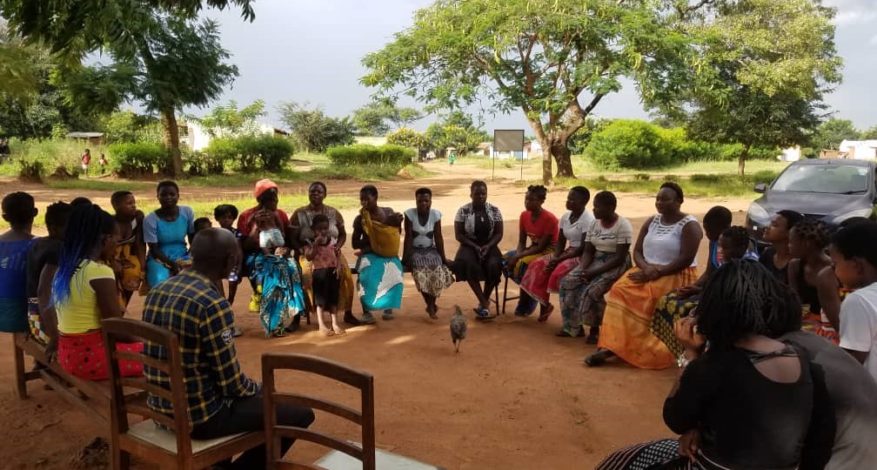
FACT planned to engage 80 Adolescent Girls and Young Women in 4 girls clubs to discuss what they know about sexual reproductive health, what the clubs are doing to reduce unintended pregnancies, early marriages and unsafe abortions.

A total number of 87 Adolescent Girls and Young Women from the 4 girls clubs were engaged during these meetings.  Through a questionnaire that was administered to inform us on the knowledge gap, it was observed that 16 out of the 87 AGYW we engaged had gone through SRHR training. It was also observed that sexual activities starts as early as 12 years and 90% of the group do not access family planning methods because they feel family planning is for married people. 

READ MORE